
The Future of Manufacturing: How Digital Twins, 3D AI, Robotics Automation, and Immersive Reality Tech Are Modernizing Industries
.jpg)
The manufacturing sector today is being driven by rapid advancements in sophisticated technology. Among the most significant contributors to this modernization are Digital Twins, 3D AI, robotics automation, and immersive reality technologies.
Protecting Workers from Manufacturing Hazards
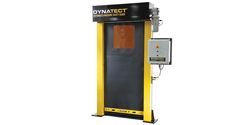
Often robots have enough mass, speed, and inertia that any contact with humans creates the primary hazard; process driven hazards, for example sparks/splatter and UV light in a robotic welding process becomes the secondary hazard.
How to harness the power of data through IoT solutions for manufacturing
.jpg)
IoT solutions have been helping manufacturers for years to streamline operations, cut costs and gain otherwise unfounded insights, and their importance is emphasized now more than ever as factories, plants and warehouses adjust to operating under new guidelines.
COVID-19 Accelerates Digitalization in Manufacturing But Data Silos Must Go!
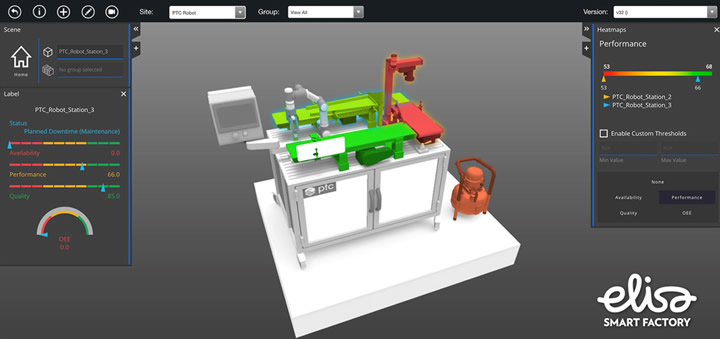
When the manufacturing industry emerges out of the COVID-19 pandemic, we will see the rapid trend of digitalization. However, to achieve maximum success - this will only happen if manufacturers finally deal with the challenge of data silos!
The first example of "Collaborative Industry" in the Italian ceramic manufacturing district has been set up with Ceramiche Mariner thanks to System Ceramics' Prime.

The complete digitalization of processes, the use of shared resources and the efficient management of data are fundamental elements for the development of a new industrial model designed for flexibility and sustainability.
The factory of the future is here, and it's digitized

Scott Kirsner for Boston Globe: The revolution is about three things: more advanced software for designing things; devices like 3-D printers that can quickly crank out a prototype; and robots and other technologies that will make the factory floor more efficient and flexible.
Records 1 to 6 of 6
Featured Product
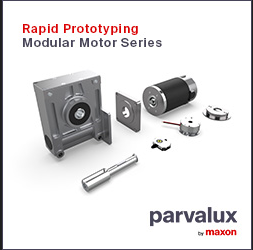
Rapid Prototyping with the Modular Motor Series
Quick to configure. Quick to build. Quick to deliver. Parvalux understands the importance of getting product in the hands of customers quickly and efficiently. The Modular Range does just that allowing customers to configure their own solution, selecting motor and gearbox, adding encoders and brakes to create a solution perfectly suited for their specific applications such as conveyor belt systems, picking systems, parcel sorting equipment, pallet shuttles and automated storage and retrieval systems (ASRS). Read our modular range guide for specifics.
Manufacturing and Automation - Featured Company

Encoder Products Company
At Encoder Products Company, we specialize in the encoders that provide you with motion feedback. EPC has been a leading designer and manufacturer of motion sensing devices for more than 50 years, we understand that each industrial automation application is different, and you need encoders that fit the needs of your applications. Our encoders are highly configurable, offer an array of shaft or bore sizes, output types, connector types, mounting options, and resolutions as high as 65,536 CPR.